You can place construction debris like lumber, drywall, and concrete in a roll-off dumpster near Sun City, along with household items such as furniture, appliances (without refrigerants), and general junk. However, Maricopa County regulations strictly prohibit storing hazardous materials, liquids, batteries, electronics, and treated lumber without proper separation. You'll need to distribute weight evenly and stay within fill lines to avoid contamination fees. Understanding these local ordinances and proper loading techniques guarantees compliance while protecting your project budget from unexpected surcharges.
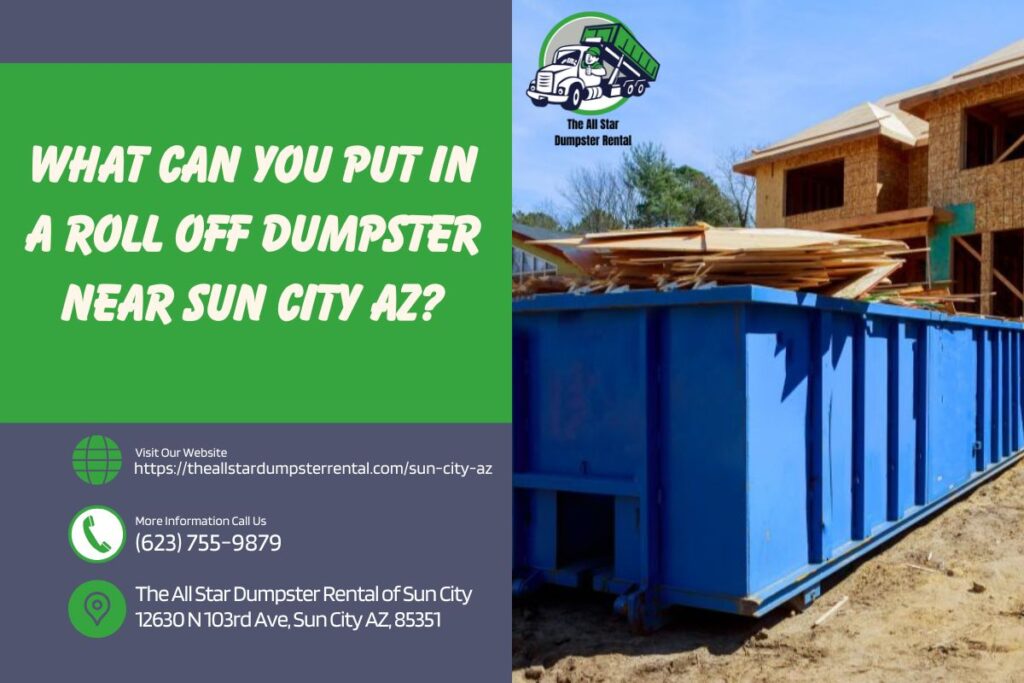
Roll-off dumpsters accept a wide range of construction and demolition debris, provided the materials don't violate EPA regulations or local waste management ordinances.
You'll find most standard waste streams permitted: dimensional lumber, drywall, roofing shingles, concrete, brick, and metal fixtures. Household cleanouts generate acceptable items like furniture, carpeting, and appliances (with proper refrigerant removal).
You're free to dispose of yard waste, including branches, stumps, and soil, though some facilities require separate containers.
However, you can't include hazardous materials: paint, solvents, asbestos, batteries, or electronics containing mercury. These substances require specialized handling through authorized disposal channels.
Check your local jurisdiction's list of prohibited items before loading. Most rental agreements clearly outline acceptable materials, ensuring you remain compliant while managing your project efficiently.
See also: Sun City roll-off dumpster rentals
Beyond construction materials, your residential cleanout projects generate substantial volumes of everyday household items that roll off dumpsters readily accommodate.
You'll find these containers accept most non-hazardous residential waste without regulatory restrictions. Understanding acceptable household debris streamlines your disposal process while maintaining compliance with local ordinances.
Standard household items permitted include:
You're free to dispose of clothing, toys, books, and decorative items in your dumpster.
Exercise caution with electronic waste—many municipalities require separate e-waste processing. Always verify that items contain no hazardous substances, such as mercury, lead, or chemical compounds, before loading.
Large-scale furniture disposal presents unique logistical challenges that roll off dumpsters efficiently resolve through their substantial capacity and reinforced construction.
You'll find these containers accommodate sofas, mattresses, box springs, dressers, and entertainment centers without dimensional restrictions that limit standard waste removal methods. The steel-reinforced walls withstand impact loads from heavy items you're discarding during renovations or estate cleanouts.
You're permitted to dispose of wooden furniture, upholstered pieces, desks, and shelving units. However, you'll need to verify local ordinances regarding mattress disposal, as some jurisdictions mandate separate processing facilities.
Remove mercury-containing thermostats from appliances before loading. Strategic placement of bulky items enhances container utilization—position larger pieces first, then fill voids with smaller debris. This approach optimizes your rental investment while maintaining compliance with weight distribution requirements.
When you're undertaking construction or renovation projects, roll-off dumpsters accommodate most structural debris within established regulatory parameters.
You'll find these containers accept materials that meet disposal facility specifications without requiring specialized handling procedures.
Acceptable Construction Materials:
You're responsible for ensuring that materials don't contain asbestos, lead-based paint, or other contaminants that require specialized remediation protocols.
Weight limits vary by container size; exceeding specified thresholds incurs additional fees.
Separate heavy materials, such as concrete, when possible to optimize load distribution.
Understanding these parameters protects your project timeline and budget while maintaining compliance with municipal waste management ordinances.
Interior demolition generates substantial volumes of panel products, timber components, and surface materials that readily roll off dumpsters and are readily accommodated under standard disposal protocols.
You'll find that gypsum board, lumber, plywood, particleboard, and laminate flooring are all acceptable waste streams. Hardwood planks, engineered wood products, and vinyl tiles require no special handling procedures.
You're free to dispose of baseboards, crown molding, and door frames without restrictions. Carpet padding and subflooring materials integrate seamlessly into mixed construction loads.
However, you must separate treated lumber from untreated stock in certain jurisdictions. Asbestos-containing materials demand certified abatement contractors and specialized disposal methods.
Paint-saturated materials may trigger hazardous waste protocols depending on concentration levels. Always verify local regulations governing dimensional lumber exceeding standard container access points.
Asphalt composition shingles constitute the predominant roofing waste stream accepted in standard roll-off containers, though you'll encounter weight-based surcharges due to their density characteristics.
Demolition debris from structural disassembly operations requires careful separation protocols to enhance your disposal efficiency and cost control.
Acceptable demolition materials include:
You're responsible for removing prohibited substances—asbestos-containing materials, treated lumber, and contaminated debris—before container placement.
Pre-sorting enhances payload capacity while ensuring compliance with municipal waste regulations.
Calculate your estimated tonnage beforehand to avoid overage fees and operational delays.
Organic matter from landscaping operations—grass clippings, leaves, branches, and shrub trimmings—qualifies for roll-off disposal under specific volume and contamination parameters. You'll need to verify your material meets containment specifications before loading.
| Accepted Materials | Prohibited Items |
|---|---|
| Untreated wood debris | Treated lumber |
| Organic plant matter | Soil or dirt |
| Small branch sections | Stumps exceeding diameter limits |
You must separate treated wood from organic waste streams. Branch diameter restrictions typically cap at 6 inches to facilitate processing efficiency. Don't contaminate loads with rocks, concrete, or construction materials—cross-contamination triggers disposal rejections and supplementary sorting fees. Stack materials uniformly to optimize container capacity while maintaining load stability during transport operations.
Natural vegetation debris requires adherence to dimensional and contamination protocols that guarantee compliance with municipal waste processing standards.
You'll find that tree branches, leaves, and grass clippings constitute acceptable organic materials for roll-off disposal when properly prepared. Branch diameter restrictions typically mandate a maximum thickness of 6 inches, while length specifications generally require 4-foot segments or less.
Your yard waste disposal parameters include:
You're responsible for ensuring vegetation remains uncontaminated by construction debris, household waste, or hazardous materials.
Proper segregation protects your autonomy while meeting regulatory standards.
Beyond organic materials, mineral-based waste streams demand distinct handling protocols and weight-bearing considerations that directly impact container selection and disposal costs.
You'll find soil, dirt, and limited quantities of concrete acceptable in roll-offs, though density restrictions apply. Clean fill dirt—free of contaminants such as petroleum or chemicals—typically qualifies for standard disposal.
However, concrete's substantial weight necessitates careful planning; you're often limited to quarter-loads to prevent exceeding weight thresholds that trigger overage fees. Mixed loads containing soil alongside lighter debris require strategic placement to distribute weight evenly.
Many operators mandate separate containers for heavy materials, giving you clearer cost structures and preventing equipment damage. Always verify your hauler's specific weight limits and material restrictions beforehand—compliance protects your budget while maintaining operational flexibility throughout your project timeline.
When disposing of appliances and scrap materials, you'll encounter specific regulatory frameworks that govern refrigerant-containing units, hazardous components, and recyclable metals.
You're required to properly manage EPA-regulated substances before disposal. Remove refrigerants from HVAC systems, refrigerators, and freezers through certified technicians. Strip hazardous elements like mercury switches and PCB-containing capacitors.
Your permissible scrap materials include:
You'll optimize your autonomy by understanding material classifications.
Separate recyclable metals to reduce disposal costs. Document compliance with local ordinances regarding appliance disposal. Follow manufacturer decommissioning protocols for specialized equipment containing regulated substances.
Standard household appliances stripped of hazardous components constitute acceptable roll-off dumpster contents under municipal solid waste regulations. You'll need to remove refrigerants, oils, and mercury switches before disposal. Most appliances qualify once you've completed proper component extraction in accordance with EPA guidelines.
| Appliance Type | Required Preparation |
|---|---|
| Refrigerators/Freezers | Refrigerant extraction by certified technician |
| Washing Machines | Drain water; remove detergent residue |
| Dishwashers | Empty food debris; disconnect utilities |
You're free to dispose of water heaters, ranges, and dryers with minimal preparation. Document your hazardous component removal for compliance verification. Non-functioning units require identical preparation protocols. Contact certified technicians for refrigerant recovery services—you'll avoid regulatory violations and environmental penalties. Municipal waste facilities accept properly prepared appliances without restrictions.
Metal components and recyclable materials are the most straightforward category for roll-off dumpster disposal, as waste management facilities actively seek them for material recovery operations.
You'll find these materials don't require pre-sorting in most cases, giving you flexibility during demolition or cleanout projects.
Acceptable metal and recyclable materials include:
You're free to combine these materials with general debris.
However, segregating metals can sometimes reduce disposal costs and accelerate processing times at transfer stations.
While roll-off dumpsters accommodate a wide range of waste streams, federal and state regulations prohibit certain materials that pose environmental hazards, safety risks, or processing complications at waste management facilities.
You can't dispose of hazardous chemicals, paints, solvents, pesticides, or automotive fluids—these require specialized handling protocols. Batteries, electronics, and fluorescent bulbs contain toxic components demanding separate processing streams.
Tires won't compact properly, causing equipment damage. Medical waste, asbestos, and radioactive materials present severe contamination risks. Propane tanks and compressed gas cylinders create explosion hazards during transport and compaction.
Biological waste and deceased animals require specific disposal methods. Understanding these restrictions helps protect you from regulatory penalties, environmental liability, and additional fees.
Contact Pristine Portable Solutions to guarantee compliant waste disposal that respects both regulations and your operational autonomy.
Hazardous waste encompasses any material that's ignitable, corrosive, reactive, or toxic according to EPA's Resource Conservation and Recovery Act (RCRA) classifications.
You can't dispose of these materials in roll-off dumpsters because of federal regulations that protect groundwater and public health.
Common hazardous items you'll need alternative disposal methods for include:
Your local hazardous waste collection facility provides compliant disposal options.
You'll maintain regulatory compliance while protecting your community's environment.
Contact Newark's designated collection sites for specific drop-off schedules and accepted materials.
Electronics contain heavy metals and toxic compounds that require specialized recycling processes rather than standard landfill disposal. You can't toss batteries, computers, or monitors into roll-off dumpsters due to environmental regulations. These items leach lead, mercury, and cadmium into soil systems.
| Prohibited E-Waste | Hazardous Component | Proper Disposal Method |
|---|---|---|
| Lithium batteries | Combustible materials | Certified recycling center |
| CRT monitors | Lead, phosphor coating | E-waste facility |
| Circuit boards | Heavy metals, solvents | Electronics recycler |
You'll need to locate designated e-waste collection sites that process these materials in accordance with EPA guidelines. Most municipalities offer free drop-off locations or scheduled pickup services. Don't risk contamination—separate your electronic waste from standard waste streams and use approved recycling channels that ensure compliant material recovery.
Beyond electronics, several material categories face disposal restrictions that don't constitute outright bans but require specific handling protocols before placement in dumpsters.
You'll need to coordinate with your rental provider about these items to maintain compliance while exercising your disposal choices:
Contact Pristine Portable Solutions at our Newark facility to confirm which restricted materials we accept for your rental.
We'll guide you through the preparation requirements, ensuring you dispose of materials responsibly without unnecessary constraints.
Many municipalities throughout New Jersey have enacted mandatory mattress recycling ordinances that will directly affect your dumpster disposal options.
You're required to verify compliance with local regulations before disposing of mattresses or box springs in roll-off containers. Newark's waste management codes prohibit placing these items in standard dumpster loads because of their non-compactable structure and recyclable components.
You'll need to contact licensed mattress recycling facilities or arrange separate pickup services. These items contain valuable steel springs, foam padding, and textile materials that must be processed through approved channels.
Unauthorized disposal results in contamination fees and potential regulatory violations.
Your alternative options include municipal bulk pickup schedules, retailer take-back programs, or specialized recycling centers.
Don't risk non-compliance—separate mattresses from your general waste stream and dispose of them through authorized pathways.
Automotive waste materials are subject to stringent disposal restrictions under New Jersey's hazardous waste regulations, making them strictly prohibited in roll-off dumpsters.
You'll need specialized recycling facilities that handle petroleum-contaminated items and heavy metals properly.
Prohibited automotive materials include:
New Jersey's Department of Environmental Protection mandates separate collection streams for these materials.
You can't bypass these requirements by mixing automotive waste with general debris.
Contact authorized automotive recyclers or hazardous waste facilities directly. Your county's recycling coordinator maintains current lists of approved disposal sites that accept automotive materials without environmental violations.
While Pristine Portable Solutions operates primarily in Newark, New Jersey, understanding regional disposal variations helps clarify why dumpster rental companies enforce location-specific restrictions.
Sun City AZ operates under Maricopa County's solid waste regulations, which prohibit hazardous materials, liquids, asbestos, and certain electronics in roll-off containers. You'll need separate handling protocols for paint, batteries, and appliances containing refrigerants.
Arizona's landfill regulations differ markedly from New Jersey's framework—what's acceptable in one jurisdiction may trigger violations in another. Local transfer stations near Sun City maintain specific material acceptance criteria that determine your disposal options.
County ordinances govern weight limits, placement duration, and prohibited substances. You're responsible for compliance with municipal codes, regardless of your service provider's location.
Understanding these jurisdictional requirements protects you from penalties and guarantees proper waste management.
Because landfill operations in Newark, NJ and surrounding areas fall under New Jersey Department of Environmental Protection (NJDEP) jurisdiction, you'll encounter strict facility-level regulations that dictate what enters their gates.
Each facility maintains specific acceptance criteria based on their permits and operational capabilities.
Before loading your dumpster, you must understand these facility-specific restrictions:
Pristine Portable Solutions helps you navigate these technical requirements upfront, preventing gate rejections that cost you time and money while keeping you compliant with state environmental standards.
Beyond facility-level requirements, your dumpster placement and usage trigger multiple permit obligations at the municipal and state levels.
You'll need a right-of-way permit if your roll-off container occupies public streets or sidewalks. Duration restrictions typically limit placement timeframes, requiring renewal applications for extended projects.
Zoning ordinances dictate acceptable locations and setback distances from property lines. You're responsible for understanding prohibited materials lists, which vary by jurisdiction and carry substantial penalties for violations.
Load weight restrictions prevent roadway damage and guarantee transport compliance with DOT regulations. Environmental permits are required when handling specific waste streams, particularly construction debris that contains regulated substances.
Document your compliance through manifests, weight tickets, and disposal receipts. These records protect you during inspections and demonstrate compliance with waste-tracking requirements mandated by state environmental agencies.
Proper loading techniques directly affect container stability, transport safety, and disposal compliance.
You'll need to distribute weight evenly across the dumpster floor to prevent shifting during transport. Break down large items to optimize space utilization and eliminate void areas that waste your rental capacity.
Critical Loading Requirements:
You're responsible for ensuring materials don't protrude above the rim or create unsafe load conditions.
Non-compliance results in extra charges, transport delays, or outright refusal of service until you've corrected the loading violations.
When loading your roll off dumpster, weight distribution affects structural integrity, transportation compliance, and roadway safety standards.
You'll need to place heavier materials at the base of the container and distribute them evenly across the floor to prevent tipping during transport. Avoid concentrating weight in single areas—this creates stress points that compromise the unit's frame and hauling capacity.
Load materials level with the container's rim; overhanging debris violates DOT regulations and creates road hazards.
You're responsible for staying within the contracted weight limits, as overages incur additional fees and may delay transportation. Balance lighter materials throughout to maintain the center of gravity.
Proper loading protects your investment, guarantees timely pickup, and keeps you compliant with municipal codes without restricting your project's momentum.
Contamination violations trigger automatic surcharges and may result in service refusal when prohibited materials are placed in your dumpster's designated waste stream.
You'll face steep penalties when mixing incompatible waste categories, particularly hazardous substances with general debris. Understanding classification requirements helps protect your budget and ensure regulatory compliance.
Prohibited materials requiring separate disposal:
Your rental agreement specifies acceptable waste types based on your selected container classification.
Cross-contamination converts standard disposal into specialized hazmat processing, exponentially increasing your costs.
Separate questionable materials at the source—you'll maintain unrestricted disposal rights while avoiding unexpected charges that jeopardize your project's financial independence.
You can't switch dumpster sizes mid-project since we're Pristine Portable Solutions, specializing in porta potty rentals in Newark, NJ—not dumpster services. However, reputable waste management providers typically allow size exchanges with proper notice and potential fees.
If you overfill your dumpster, you'll incur additional fees and risk safety violations. We can't legally transport overloaded containers due to DOT regulations. You'll need to remove excess material or upgrade to a larger unit immediately.
You'll typically keep your roll-off dumpster for 7-14 days, though we're flexible with extensions. Your rental period is determined by your project scope and local permitting requirements, ensuring you've sufficient time to complete waste disposal safely.
You don't need to be present during delivery or pickup. However, you must ensure clear access to the placement area, meet all safety clearances, and confirm in advance that the location complies with local Newark, NJ regulations.
Yes, you'll pay more for larger containers. Pricing scales with capacity—10-yard units cost less than 40-yard dumpsters. However, you're free to choose the size that matches your project's waste volume and regulatory disposal requirements.